Neurofeedback, biofeedback and lifestyle habits: training the brain and body to self-regulate better, from age 5, in Brétigny-sur-Orge, near Paris.
Integrative neurotherapy is a non-invasive and drug-free training approach that helps the brain and body regain flexibility in the way they adapt. It is based on physiological feedback (biofeedback): sensors make normally unconscious signals visible in real time (the brain’s electrical activity, heart rate, breathing, muscle tension) so that the person can learn to adjust them.
In English-speaking countries, the word “neurotherapy” is commonly used to refer to the practice of biofeedback and neurofeedback. In 2008, the three leading professional organisations in the field, the AAPB, the BCIA and the ISNR, adopted a shared definition: biofeedback is a learning process that enables people to change their physiological activity in order to improve their health and performance, and over time these changes may be maintained without the equipment.
The approach is called “integrative” for two reasons: it brings several tools together, and it considers the whole person, with their history, their body, their sleep and their family, school or work environment. As Institut Neurosens puts it, the starting point is not an isolated symptom but the state of regulation of the body–brain system as a whole. Inattention, restlessness or broken nights often reflect a system that struggles to shift from one state to another.
Self-regulation is the ability to adjust your level of arousal, your emotions and your attention to the needs of the moment: staying engaged in class or in a meeting, calming down after an upset, winding down in the evening to fall asleep. It is not a matter of willpower: these adjustments rely largely on automatic mechanisms, which you can learn to perceive more clearly.
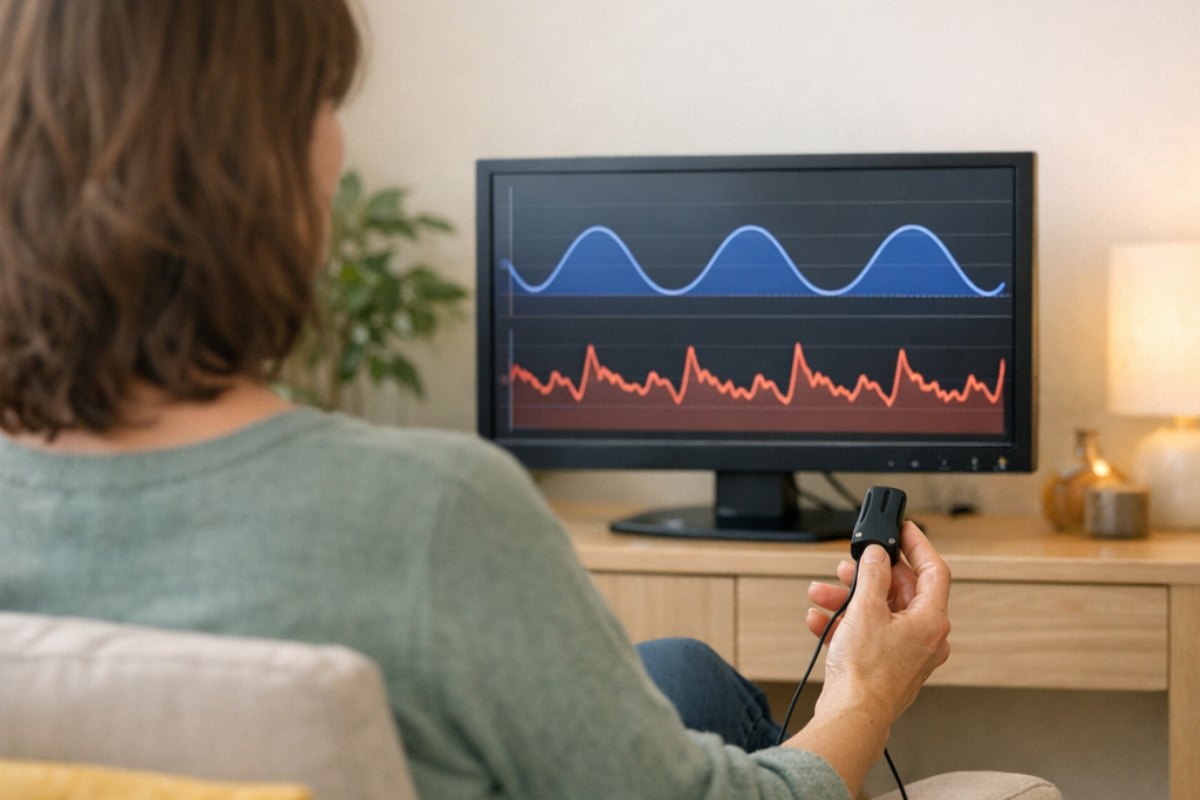
Feedback works like a mirror. When a signal moves closer to the target, visual or audio feedback shows it immediately: the breathing curve becomes smoother, the picture in a film brightens. Little by little, the brain associates this state with the “reward” and learns to find it again. This is the principle of operant conditioning, which relies on neuroplasticity, the nervous system’s ability to reorganise itself through experience (Sitaram et al., 2017). Much of this learning is implicit, rather like learning to balance on a bike without thinking about each muscle.
MeasureSensors record brain or body activity.
SeeA film, a sound or a game responds in real time.
AdjustThe brain identifies the target state and learns to return to it.
ConsolidateSession after session, through neuroplasticity.
↻ The loop repeats throughout the session, building towards independence.
The ultimate goal is independence: using these skills in everyday life, without sensors or a screen.
The brain is in constant dialogue with the body via the autonomic nervous system. Its sympathetic branch acts as an accelerator in response to demands or stress; its parasympathetic branch, which works in particular through the vagus nerve, acts as a brake and promotes recovery. Their balance can be read in measurable signals: heart rate variability, breathing, muscle tension, hand sweating, skin temperature.
These exchanges work both ways. At rest, most adults breathe between 9 and 24 times a minute. When breathing slows to around six breaths a minute, the heart rate starts to rise and fall in time with the breath, and these variations are at their largest. This is the “resonance frequency” used in cardiac coherence, or heart coherence breathing (Lehrer and Gevirtz, 2014). A systematic review links slow breathing with greater relaxation and alertness, and with fewer signs of anxiety (Zaccaro et al., 2018). Conversely, shallow, rapid breathing keeps the body in a state of alert.
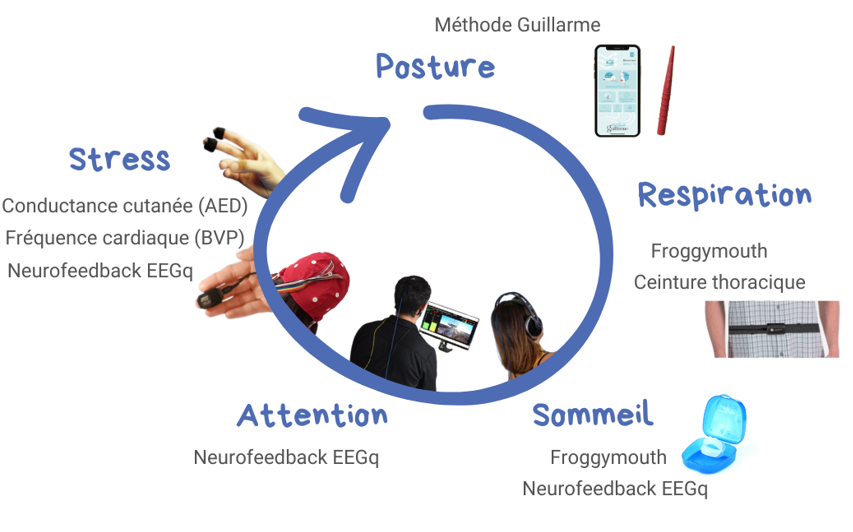
Our support is organised around five interrelated functions, drawn from the Institut Neurosens model. Among other things, this model describes a “tonic-ventilatory system” linking posture and breathing. A weakness in one function often affects the others; conversely, progress in one can start a virtuous circle.
| Function | What we observe | Everyday example |
|---|---|---|
| Posture and muscle tone | Weight distribution, tension, ability to relax | Raised, tense shoulders by the end of the day, difficulty sitting still |
| Breathing | Rate, depth, breathing through the nose or the mouth | Shallow breathing when pressure builds, mouth open at night |
| Sleep | Falling asleep, night waking, recovery | Drawn-out bedtimes, waking up tired |
| Emotions and stress | Rising tension, returning to calm | Long-lasting outbursts of anger, rumination in the evening |
| Attention and cognition | Concentrating, getting organised, memorising | Homework that drags on, forgetting things in meetings |
Sensors placed on the scalp record the brain’s electrical activity without sending anything into it; a film, a sound or a game responds in real time. There are two options, chosen after the assessment: swLORETA Z-score neurofeedback (19 electrodes, NeuroGuide software) or two-channel neurofeedback (BioGraph Infiniti, Thought Technology).
Cardiac coherence (pulse and heart rate variability), breathing, muscle activity (EMG), electrodermal activity and skin temperature give you concrete reference points to help you release tension (see biofeedback in session). Depending on each person’s needs, FroggyMouth or the Guillarme method complement this work on breathing.
Sleep, diet, physical activity, screens, breaks: one or two realistic adjustments at a time carry the training forward between sessions. For children, parent coaching is part of this. Soon, the Élan Minds app will extend this support into everyday life.
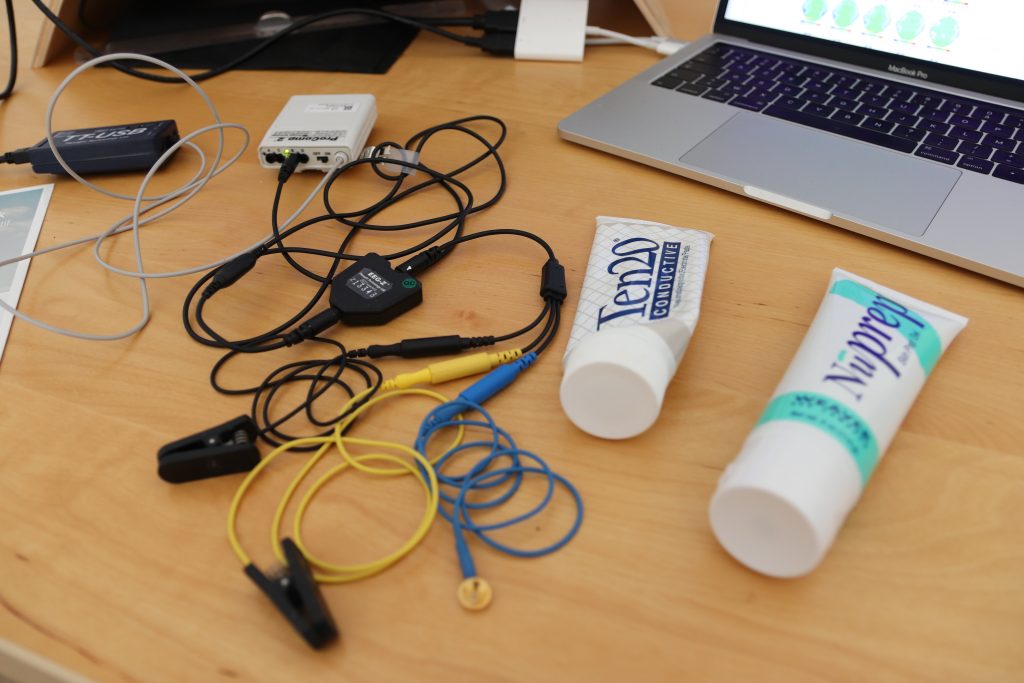
Each one gives you a concrete reference point, visible on screen, to help you learn to release tension.
A session lasts one hour; the rest of the week matters just as much. International recommendations help us set realistic goals, which we adapt to each family:
Sleep has a direct impact on emotions: after a sleepless night, the amygdala, a region involved in emotional reactions, responds more than 60% more strongly to negative images in healthy young adults (Yoo et al., 2007). Screens are one of the easiest things to act on: in a review of 67 studies, screen time was associated with shorter or later sleep in children and adolescents in 90% of the studies, although this does not prove cause and effect (Hale and Guan, 2015).
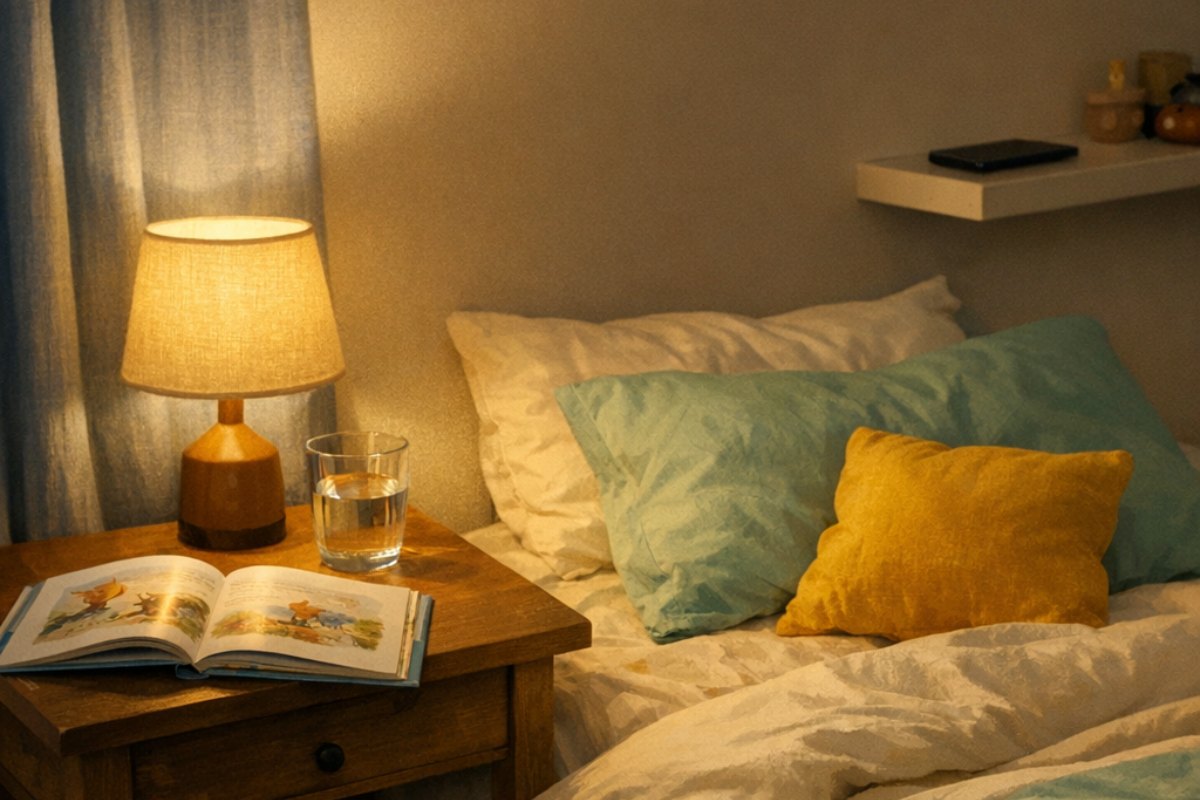
It is hard to ask a brain to concentrate when the body is still on alert, or to sleep well with shallow breathing and tense muscles. When the three are combined, each supports the others: biofeedback quickly offers concrete things to work with (breathing, letting go of tension), neurofeedback works on brain regulation over the weeks, and daily habits consolidate progress between appointments. This holistic approach is tailored to each person: nothing is applied “by default”.
The choice of tools is based on a comprehensive initial assessment, which includes a quantitative EEG (qEEG). The practical steps are set out on the page The programme: qEEG assessment and training.
The centre welcomes children from age 5, teenagers and adults who would like to regulate their attention, sleep, emotions or stress levels better. For each concern, an article gives an overview:
Centre Élan Neurothérapie was founded in 2021 in Brétigny-sur-Orge (Essonne, south of Paris) by Sarah Dehan, a neurotherapist trained at Institut Neurosens (three training cycles, including a first neurofeedback cycle accredited by the BCIA), where she now works as a trainer. To find out more, visit our About us page.
Biofeedback covers the techniques that make body signals visible: breathing, heart rate, muscles, skin. Neurofeedback is a form of biofeedback applied to the brain’s electrical activity. At the centre, the two are combined within the same session.
No. It is a neurotherapy centre: we offer training through neurofeedback and biofeedback. The qEEG assessment is not a medical EEG and does not replace a doctor’s opinion. When necessary, we refer you to your doctor.
Yes, from age 5. Sessions are adapted to the child’s age, with playful materials, and parents are involved in the lifestyle advice.
No. We start from your daily life and suggest one or two realistic adjustments at a time: sleep, screens, physical activity or breathing.
No. It complements medical, allied health and educational support. No treatment should be changed without your doctor’s advice.