The essentials in 30 seconds
Endless struggles to fall asleep, difficult mornings, snoring, exhausting days: for many children with ADHD, what happens at night affects the day. Conversely, poor-quality sleep can on its own make a child restless and distracted. Here is how to spot what is going wrong, who to see, and what you can put in place at home.
Sleep and ADHD: a two-way link
In its 2024 recommendation on ADHD in children and adolescents, the HAS is clear: “It is recommended that sleep be systematically assessed in individuals with ADHD.” Assessing the sleep–wake rhythm is an integral part of the diagnostic process.
According to this meta-analysis, children with ADHD are more likely than others to show bedtime resistance, difficulty falling asleep, night waking, difficulty waking up in the morning, sleep-disordered breathing and daytime sleepiness.
ADHD can disrupt sleepas described by the HAS
- a preference for the evening (“evening chronotype”)
- a delayed sleep phase: falling asleep late, difficulty getting up
- a shift in the release of melatonin, the sleep hormone
Poor sleep can mimic ADHDdifferential diagnosis
- unrefreshing sleep can show up as hyperactivity, irritability and attention difficulties
- in children, sleepiness sometimes shows up as restlessness, as a way of “fighting” it
- sleep apnoea also causes fatigue, inattention and restlessness
The most common sleep disorders
Insomnia and delayed sleep phase
Falling asleep late, difficulty getting up in the morning. Delayed sleep phase is more common in adolescence.
Obstructive sleep apnoea
Snoring, pauses in breathing, sweating, mouth breathing. This should be considered in any child who snores and shows signs of ADHD.
Restless legs
Unpleasant sensations in the legs in the evening and an urge to move. This syndrome warrants checking for iron deficiency.
Parasomnias
Sleepwalking and night terrors are very common in children. They are worth mentioning to the doctor if they keep happening.
Enuresis (bedwetting) is also a common co-occurring condition in children with ADHD. Each of these situations calls for a different approach, which is why a doctor’s opinion is essential before taking any other step.
Signs to note before talking to the doctor
For one to two weeks, note what you observe, at night and during the day. These observations do not make a diagnosis: they help the doctor decide which tests to carry out.
To structure these observations, the HAS points to a scale validated in French for screening sleep disorders in children, the SDSC, which exists in two versions (6 months–4 years and 4–16 years). Completed by parents based on the last six months, it provides guidance without replacing a specialist’s opinion. A sleep diary (bedtime, time of falling asleep, waking time) is a useful addition to this questionnaire. Our questionnaire for parents also helps you take stock of attention, restlessness, emotions and sleep.
The diagnostic process, step by step
The HAS recommends referral to a specialist sleep consultation if these strategies are not enough. In some cases, the doctor may also suggest melatonin to bring sleep onset forward: that decision is theirs. To better understand the diagnostic process for ADHD itself, read recognising the signs of ADHD in children.
Sleep hygiene: recommended measures
In the case of delayed sleep phase, the HAS describes simple chronobiological measures, to be adapted to each child and each family.
Regular sleep times
Going to bed and getting up at regular times helps the body clock settle into a rhythm. The same ritual every evening (washing, a story, soft lighting) signals to the brain that night is approaching.
A calm time before bed
Aim for a calm time and low lighting in the evening. Screens are among the lifestyle habits that the HAS recommends discussing systematically with families of children with ADHD.
Light and movement during the day
Good exposure to light during the day and physical activity earlier in the day help children fall asleep earlier.
Our free guide “Your child’s attention and sleep” (in French) brings together practical tips: it is sent to subscribers of The Élan Neuro Letter, our monthly newsletter.
What about biofeedback?
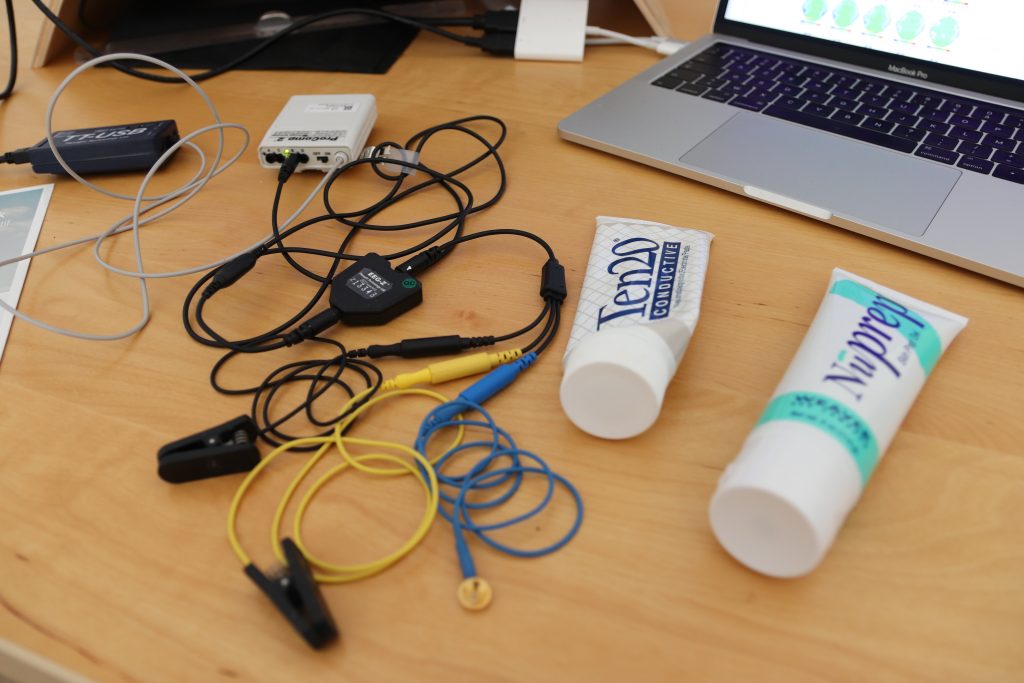
At the centre, sleep is part of the quantitative EEG (qEEG) assessment: parents complete a sleep questionnaire, and we look out for signs suggesting a breathing disorder or restless legs. If we notice any, we ask you to see the doctor before starting any training.
Breathing and cardiac coherence biofeedback lets the child see, in real time, how their breathing affects their heart rate. They learn a simple exercise they can repeat at bedtime. The aim is to make this moment calmer, alongside sleep hygiene measures, without replacing medical care for a sleep disorder.
As for neurofeedback, a pilot study without a control group in children and adults with ADHD (aged 6 to 53) observed faster sleep onset after sensorimotor rhythm training (Arns et al., 2014). These results remain preliminary, and the HAS considers that there is “not a sufficient level of evidence” to offer neurofeedback for ADHD. Find out more on our neurofeedback and ADHD page.
Frequently asked questions
My child snores: should I be worried?
Regular snoring, especially with pauses in breathing, sweating, mouth breathing or daytime tiredness, is worth discussing with the doctor, who can refer your child to an ENT specialist if needed.
Is melatonin the answer?
It can help some children fall asleep earlier, but it is a medical decision. The HAS recommends behavioural strategies first, after ruling out sleep apnoea. Never give it without the doctor’s advice.
Can biofeedback replace medical follow-up for sleep?
No. It helps the child learn to relax, alongside sleep hygiene measures and medical follow-up. It does not replace the diagnosis or treatment of a sleep disorder.
Sources
- HAS (2024). Trouble du neurodéveloppement / TDAH: diagnostic et interventions thérapeutiques auprès des enfants et adolescents [Neurodevelopmental disorder / ADHD: diagnosis and therapeutic interventions for children and adolescents]. Recommendations (sleep: § 3.1.5.1; differential diagnosis; neurofeedback: § 3.1.4.2)
- Cortese S., Faraone S.V., Konofal E., Lecendreux M. (2009). Sleep in children with attention-deficit/hyperactivity disorder: meta-analysis of subjective and objective studies. Journal of the American Academy of Child and Adolescent Psychiatry, 48(9), 894-908
- Putois B. et al. (2017). The French Sleep Disturbance Scale for Children. Sleep Medicine, 32, 56-65
- SFRMS (French Society of Sleep Research and Medicine). Échelle de dépistage des troubles du sommeil de l’enfant de 4 à 16 ans [Sleep disturbance screening scale for children aged 4 to 16] (French version, 2017)
- Arns M., Feddema I., Kenemans J.L. (2014). Differential effects of theta/beta and SMR neurofeedback in ADHD on sleep onset latency. Frontiers in Human Neuroscience, 8, 1019