The essentials in 30 seconds
Neurofeedback is attracting growing interest from the mainstream media. In this press review, we summarise an article from Santé Magazine, written by Emmanuelle Blanc with insights from Dr Jean-Arthur Micoulaud-Franchi and Dr Olivier Pallanca. We then look at it in the light of the latest knowledge and recommendations.
What the article covered
The article described neurofeedback as a way of influencing your own brain activity. The brain constantly emits electrical signals whose frequency varies with our state: alpha waves tend to accompany calm, beta waves alertness and concentration. Training involves strengthening or reducing certain frequencies depending on the goal, with one advantage highlighted by the authors: positive reinforcement, as the person sees their progress in real time.
The article went on to review several indications: ADHD and drug-resistant epilepsy, followed by areas considered more uncertain (insomnia, autism, depression, post-traumatic stress, Alzheimer’s disease). It noted that the technique, common in the United States, Germany and the Netherlands, remained marginal in France, available in a few university hospitals.
A brief history of neurofeedback
Indication by indication: where does the research stand?
| Indication | What the article said | What we know today |
|---|---|---|
| ADHD | Many studies report an improvement in inattention and impulsivity. | Mixed results. In teachers’ ratings, the meta-analysis co-authored by Dr Micoulaud-Franchi (2014) found an improvement in inattention only. The largest to date (Westwood et al., 2025) finds no overall effect when assessments are blinded. The HAS (2024) does not recommend it. |
| Drug-resistant epilepsy | Fewer seizures in around two thirds of patients. | A meta-analysis (Tan et al., 2009) reports fewer seizures in 64 of the 87 patients studied, in small studies. This indication is exclusively a matter for specialist medical teams. |
| Insomnia | Modest progress; a technique still to be refined. | In a double-blind study, neurofeedback did no better than sham training (Schabus et al., 2017), and a 2024 meta-analysis shows no additional benefit compared with other approaches. |
| Autism | A possibility yet to be confirmed. | The HAS (2026) lists neurofeedback among the interventions not recommended for autism spectrum disorder (ASD), owing to insufficient evidence. |
| Depression, post-traumatic stress, Alzheimer’s | Promising results in a few studies. | Areas of preliminary research, with no recommendation to date. |
Supervised neurofeedback and unvalidated methods
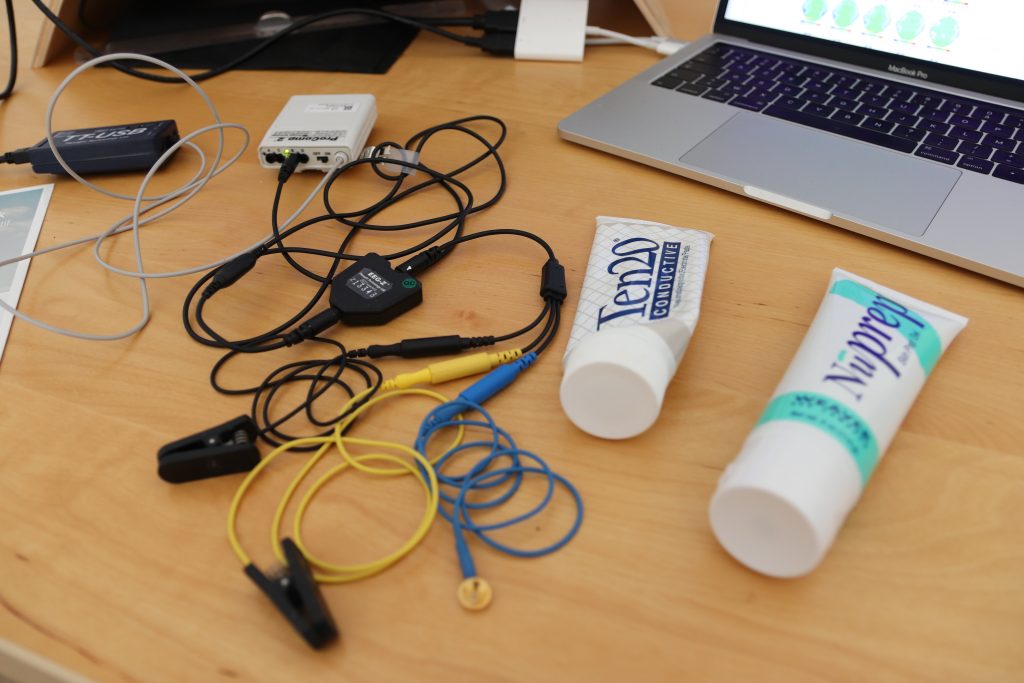
The article warned against certain commercial methods that claim effects on many conditions without solid scientific evidence, and named NeurOptimal as one of them. It also mentioned a consumer smart headset designed to help manage stress. These tools do not offer the same framework as training led by a professional, based on an assessment and with defined goals.
Our view at Centre Élan
The article’s strength was that it presented neurofeedback with insights from specialist doctors, and distinguished the most studied indications from areas where the evidence is still weak. Its title, however, promised more than research can support today. Our approach is more modest: we offer self-regulation training alongside medical care.
What we offerat the centre
- A quantitative EEG (qEEG) assessment to describe baseline functioning
- Personalised training, combined with biofeedback
- Progress measured by a mid-point assessment
- Liaison with the professionals who support you
What we do not offerto be fully transparent
- A diagnosis: that is the doctor’s role
- Epilepsy care
- An alternative to prescribed treatment
- A promise of results or a success rate
For ADHD, you will find details of recent studies in our article ADHD, neuroscience and neurofeedback, and our position on autism in Autism (ASD) and neurofeedback.
Frequently asked questions
Is neurofeedback recommended by the French National Authority for Health (HAS)?
No. The HAS does not recommend it for ADHD (2024) or for autism spectrum disorder (2026), because the level of evidence is insufficient. It may be considered as a complementary approach, provided this is a fully informed choice.
Can neurofeedback help with epilepsy?
Older studies looked at drug-resistant epilepsy, but this indication is solely a matter for specialist doctors. Centre Élan does not offer training for epilepsy, and no anti-epileptic treatment should be changed without medical advice.
How is this different from a consumer relaxation headset?
A consumer headset offers a standard programme, with no assessment or follow-up. At the centre, training starts with a qEEG assessment and works towards goals agreed with you, and a professional measures and supports your progress.
Sources
- Article summarised: Emmanuelle Blanc, with Dr Jean-Arthur Micoulaud-Franchi and Dr Olivier Pallanca, Santé Magazine.
- Haute Autorité de santé (2024). TDAH: diagnostic et interventions thérapeutiques auprès des enfants et adolescents [ADHD: diagnosis and therapeutic interventions for children and adolescents]
- Haute Autorité de santé (2026). Trouble du spectre de l’autisme: interventions et parcours de vie du nourrisson, de l’enfant et de l’adolescent [Autism spectrum disorder: interventions and life pathways for infants, children and adolescents]
- Micoulaud-Franchi JA et al. (2014). EEG neurofeedback in children with ADHD: an updated meta-analysis. Frontiers in Human Neuroscience
- Westwood SJ et al. (2025). Neurofeedback for ADHD: a systematic review and meta-analysis. JAMA Psychiatry
- Tan G et al. (2009). Meta-analysis of EEG biofeedback in treating epilepsy. Clinical EEG and Neuroscience
- Schabus M et al. (2017). Better than sham? A double-blind placebo-controlled neurofeedback study in primary insomnia. Brain
- Rihuete-Galve MI et al. (2024). Neurofeedback to enhance sleep quality and insomnia: a systematic review and meta-analysis. Frontiers in Neuroscience