The essentials in 30 seconds
Press articles introduce neurofeedback to many families, and that is a good thing. But they can also oversimplify. In this press review, we summarise an article by Lise Bouilly published in Femina in April 2021, then compare it with the current state of research.
What the article said
The article presented neurofeedback as a method rooted in neuroscience, developed in the 1960s, first studied in epilepsy and then in children with ADHD. Dr Adrian Chaboche, the doctor interviewed, described it as a method that helps people “better understand how their brain works” in order to learn to regulate it.
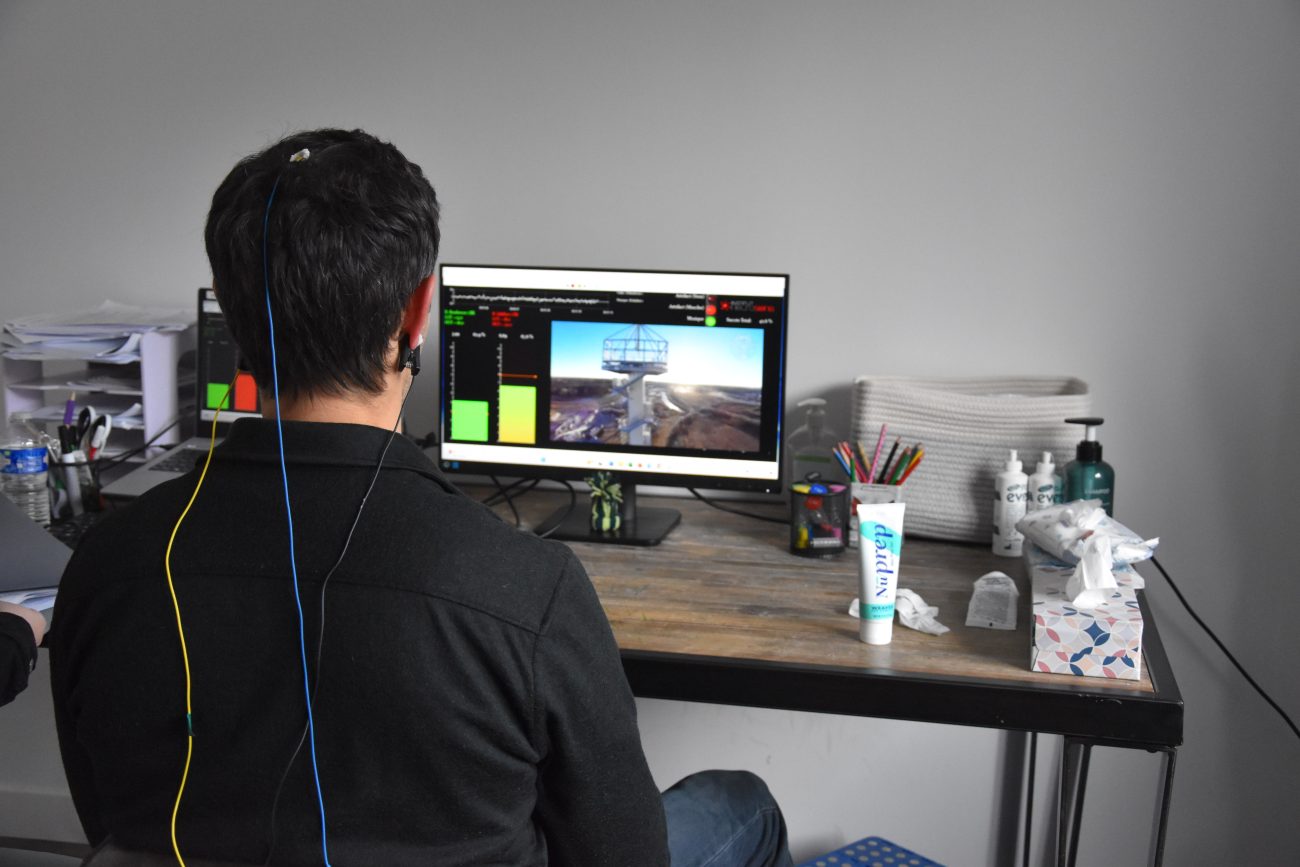
The principle as explained to readers: sensors placed on the scalp record the brain’s electrical activity, and software extracts the different brainwaves. The article stated that an excess of slow waves is often observed in hyperactive children, in regions linked to organisation and attention. It then described the programme on offer:
The article emphasised how encouraging the method is: successes are highlighted rather than mistakes. It mentioned around fifteen sessions for a first stage, and the addition of cardiac coherence or (self-)hypnosis depending on the practitioner. It concluded that, according to several American studies, a large majority of children improved, sometimes with a reduction in medication under medical supervision.
Five years on: what the research says
Since 2021, several important studies have been published, and the HAS has issued its recommendations on ADHD. Here is how the article’s main claims stand today:
| What the article claimed | What we know today |
|---|---|
| A method recognised abroad as an alternative to medication | In France, the HAS (2024) does not recommend neurofeedback for ADHD, owing to insufficient evidence. The largest meta-analysis to date (Westwood et al., 2025) finds no overall effect when progress is assessed blind. |
| An excess of slow waves in hyperactive children | True for only some children. The theta/beta ratio is not a reliable diagnostic marker (Arns et al., 2013; American Academy of Neurology, 2016). |
| A large majority of children improved | The progress reported by parents in studies is real, but in a double-blind trial of 144 children, no difference was found compared with sham neurofeedback (2021). |
| Lasting learning thanks to brain plasticity | According to parents, the effects are maintained 2 to 12 months after training (Van Doren et al., 2019); long-term blinded data remain scarce. |
| Medication sometimes reduced or stopped | In the 2021 trial, children in the neurofeedback group were taking less medication at 13 months, without any greater improvement in symptoms. This decision rests solely with the doctor. |
We look at these studies in detail, including their strengths and limitations, in our article ADHD, neuroscience and neurofeedback: what the research says.
What the article got right
Beyond its over-enthusiastic wording, the article accurately described several aspects of training that we see every day:
Active training
The child is not passive: session after session, they learn to notice when their attention drifts and to get back to the task.
An encouraging approach
Real-time feedback rewards successes. For children who are often corrected, this matters for their self-confidence.
Working with the body
Cardiac coherence and biofeedback help to ease tension and manage emotions better.
Our view at Centre Élan
We do not talk about a “solution”: ADHD calls for comprehensive support (information, parent coaching, school adjustments, medical follow-up and, if needed, medication). Neurofeedback, combined with biofeedback, can be added to this as self-regulation training, with progress measured by a mid-point assessment and by feedback from the family and the school.
These are the goals we work on with families, with no promise of results. To see how it works in practice, visit our neurofeedback and ADHD page. And if you are wondering about the signs of the condition, our guide for parents will help you see things more clearly.
Frequently asked questions
Is neurofeedback recognised in France for ADHD?
No. In its 2024 recommendations, the HAS considers the evidence insufficient and does not recommend it as part of ADHD-specific care. It may be considered as a complementary approach, provided this is a fully informed choice.
Does neurofeedback mean medication can be stopped?
That is not its aim, and it is not for us to decide. Any change to treatment is solely a matter for the doctor who looks after the child, based on the child’s overall progress.
How many sessions should I expect?
At Centre Élan, expect around thirty one-hour sessions on average, once or twice a week: a qEEG assessment at the start, about fifteen sessions, a comparative mid-point assessment, then about fifteen more sessions.
Sources
- Article summarised: Lise Bouilly, Femina, April 2021 (print edition).
- Haute Autorité de santé (2024). TDAH: diagnostic et interventions thérapeutiques auprès des enfants et adolescents [ADHD: diagnosis and therapeutic interventions for children and adolescents]
- Westwood SJ et al. (2025). Neurofeedback for ADHD: a systematic review and meta-analysis. JAMA Psychiatry
- Neurofeedback Collaborative Group (2021). Double-blind placebo-controlled trial of neurofeedback for ADHD with 13-month follow-up. JAACAP
- Van Doren J et al. (2019). Sustained effects of neurofeedback in ADHD. European Child & Adolescent Psychiatry
- Arns M et al. (2013). A decade of EEG theta/beta ratio research in ADHD. Journal of Attention Disorders
- Gloss D et al. (2016). The utility of EEG theta/beta power ratio in ADHD diagnosis. Neurology