The essentials in 30 seconds
OCD: much more than “quirks”
Obsessive-compulsive disorder (OCD) combines obsessions – intrusive, distressing thoughts, images or urges (fear of contamination, of making a mistake or of causing harm, a need for order or symmetry…) – and compulsions, repeated actions or mental acts performed to reduce anxiety: washing, checking, arranging, counting. These rituals can take up several hours a day and have a heavy impact on family, school, work and social life.
Adults with OCD usually know that their obsessions come from their own mind, which creates shame and guilt and leads them to hide the disorder. In young children, OCD sometimes shows up differently: restlessness, anger at untidiness, withdrawal or difficulties at school. Diagnosis is often delayed.
What neuroscience tells us
Having intrusive thoughts is common and usually harmless. In OCD, these thoughts appear to be over-interpreted: judged too important, unacceptable or threatening, they trigger intense anxiety that compulsions try to soothe. Brain imaging and animal models have helped to clarify the circuits involved:
Basal ganglia
In particular the striatum, which is involved in habits, reward and decision-making.
Orbitofrontal cortex
Located at the front of the brain, it plays a role in emotions and reasoning.
Anterior cingulate cortex
Connected to the other two, it is also involved in regulating emotions.
Several neurotransmitters are involved (serotonin, dopamine, glutamate). Genetic factors also play a part: heritability is estimated at between 27% and 49%, and is higher when the disorder starts early. These circuits, which are shared with other disorders, partly explain why OCD is often associated with anxiety, depression or tics.
Established treatments
OCD is diagnosed clinically by a doctor, psychiatrist or psychologist, and severity is measured using the Y-BOCS scale (CY-BOCS for children). According to Inserm, treatment improves daily life for about two thirds of patients.
| Approach | How it works | Place in treatment |
|---|---|---|
| CBT with exposure and response prevention | Gradually facing feared situations without performing the ritual, so that anxiety subsides on its own. | First-line; the most widely used approach in children and adolescents. |
| SRI antidepressants | Prescribed by a doctor, often at higher doses than for depression; at least three months are needed to judge the effect. | First-line, alone or combined with CBT. |
| Add-on antipsychotics | Added by the doctor if the response is insufficient or if tics are also present. | As an add-on, at a later stage. |
| Deep brain stimulation, surgery | Neurosurgical techniques reserved for severe, treatment-resistant forms. | Within research protocols, in specialist centres. |
| Neurofeedback | Self-regulation training based on brain activity. | Experimental, as a complement. |
Medication is often continued for a long time, including after improvement: it must never be stopped or changed without the doctor’s advice.
Neurofeedback and OCD: still experimental
Since OCD involves identified brain circuits, learning to modulate their activity is an appealing idea. However, the evidence remains limited. A systematic review with meta-analysis (Ferreira et al., 2019) found only ten studies, totalling 102 participants, including three randomised trials. The before-and-after effects ranged from moderate to large, but there was high heterogeneity between studies, so no conclusions can be drawn.
What is establishedsolid evidence
- CBT with exposure and SRIs are effective for most patients.
- The circuits involved in OCD are increasingly well understood.
- Anxiety, stress and sleep influence how the disorder is experienced.
What remains to be shownfor neurofeedback
- A specific effect, beyond the placebo effect.
- Lasting results in large samples.
- A standard protocol for OCD.
Be wary, too, of devices presented as “neurofeedback” without any individualised measurement of brain activity: our article Dynamical neurofeedback or qEEG: what’s the difference? explains what sets them apart.
What we offer at the centre
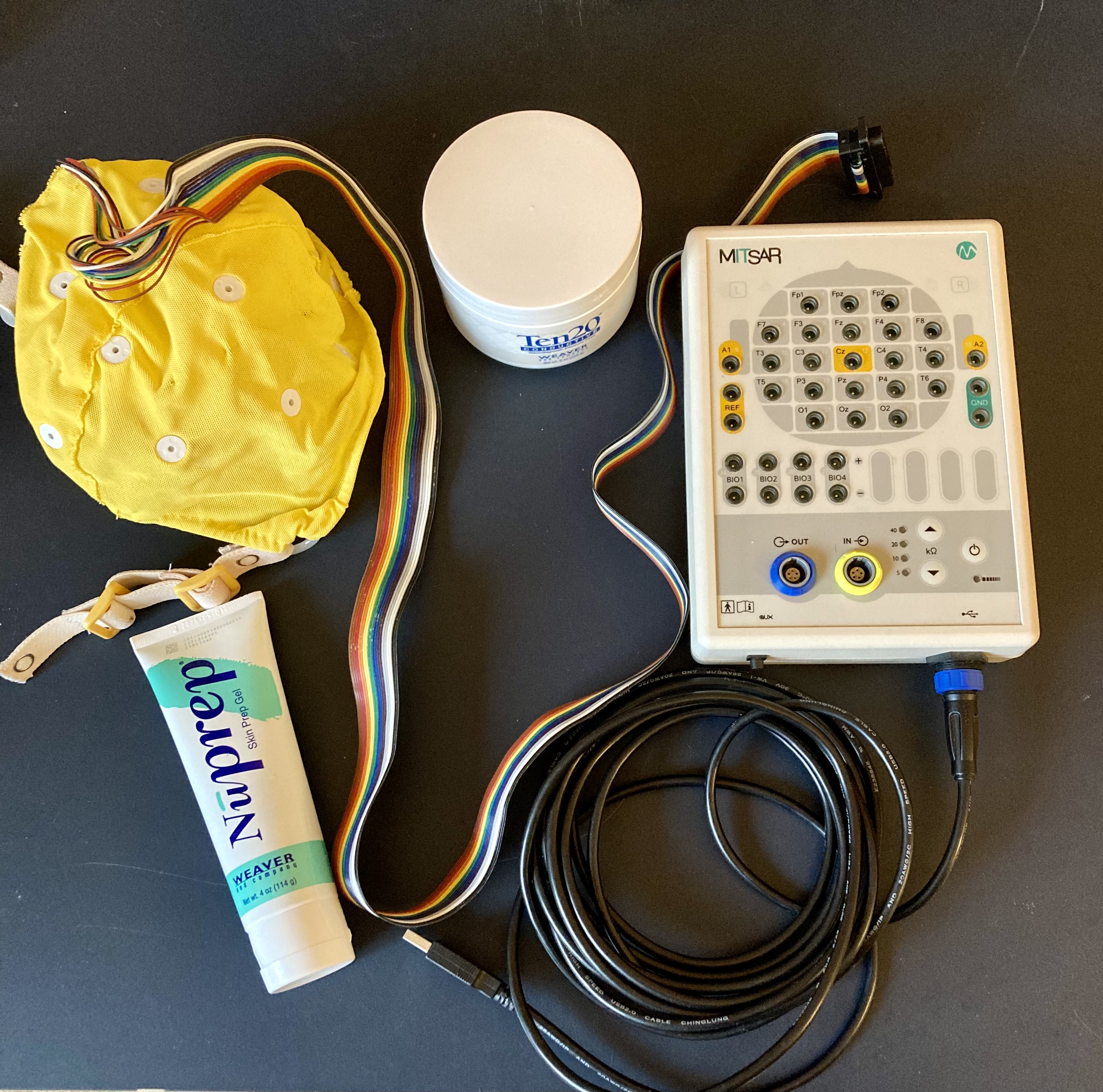
We do not offer neurofeedback in place of CBT or medication. Alongside them, after a quantitative EEG (qEEG) assessment, training may focus on underlying anxiety, stress management (cardiac coherence and breathing biofeedback), sleep and attention, which are often affected by OCD. With your consent, this work is coordinated with the psychiatrist or psychologist who is treating you. To find out more about the anxiety side, read our article on anxiety disorders.
Frequently asked questions
Can neurofeedback replace CBT or medication?
No. CBT with exposure and response prevention, and SRIs, are the standard approaches. Neurofeedback remains experimental in OCD and can only be considered alongside them.
Can a qEEG assessment diagnose OCD?
No. OCD is diagnosed clinically, by a doctor, psychiatrist or psychologist. The qEEG assessment describes brain activity and is used solely to guide training.
What should I do if I think I have OCD, or if my child shows signs of it?
Talk to your GP (family doctor), who can refer you to a psychiatrist or a psychologist trained in CBT. Don’t wait until the rituals take over: effective treatments are available.
Sources
- Inserm (2021). Troubles obsessionnels compulsifs (TOC): une prise en charge le plus souvent efficace [Obsessive-compulsive disorder (OCD): treatment is usually effective]. Dossier produced with L. Mallet, A.-H. Clair and P. Domenech (in French).
- Ferreira S., Pêgo J.M., Morgado P. (2019). The efficacy of biofeedback approaches for obsessive-compulsive and related disorders: a systematic review and meta-analysis. Psychiatry Research, 272, 237-245.