The essentials in 30 seconds
What is tinnitus?
Tinnitus is the perception of a sound (whistling, buzzing, crackling, etc.) that has no external source. According to the guideline adopted in June 2026 by the French National Authority for Health (HAS), it is described as persistent when it has lasted for at least six months, and disabling when it significantly affects quality of life. Distress is measured with tools such as the THI questionnaire (Tinnitus Handicap Inventory).
Tinnitus becomes more common with age and with hearing loss. A large international meta-analysis (Jarach et al., 2022) estimates that around 14% of adults have tinnitus, and that around 2% have a severe form.
Why the brain is involved
Tinnitus is often linked to hearing loss or noise exposure, but it is the brain that perceives it, gives it importance and determines whether or not it becomes a source of distress. The HAS describes a well-known vicious circle: tinnitus causes stress; stress focuses attention on the sound; and this in turn amplifies how the sound is perceived.
EEG studies have also found altered brain activity in the auditory regions of many people, notably a decrease in alpha rhythms, which are associated with rest, and an increase in slow delta rhythms, although this profile is not found in every study. The idea of neurofeedback training is based on these observations.
Standard care: see an ENT specialist first
The HAS places the GP or ENT specialist at the heart of the care pathway. The assessment includes a detailed history, a clinical examination with otoscopy, audiometry and, depending on the case, imaging (for example, an MRI scan is routinely recommended when tinnitus affects one side only).
| Approach | HAS position (2026) |
|---|---|
| Cognitive behavioural therapy | Recommended in all cases. |
| Hearing aids (sound therapy) | Offered depending on hearing level and degree of distress, with a hearing aid audiologist. |
| Cochlear implant | In specific cases of severe deafness. |
| Physical activity | Recommended when there are associated anxiety disorders. |
| Neuromodulation, stimulation | Insufficient data to recommend it; repetitive transcranial magnetic stimulation (rTMS) not recommended for chronic refractory tinnitus. |
| Neurofeedback, sophrology, hypnosis | Not recommended as a routine approach for tinnitus itself; may be used alongside other care for associated difficulties. |
The HAS also highlights the role of patient associations and peer support in sharing reliable information and guarding against questionable practices.
Neurofeedback and tinnitus: what the research says
Neurofeedback aims to teach the brain to rebalance the activity observed in the auditory regions, for example by strengthening alpha rhythms and reducing delta rhythms. A literature review (Güntensperger et al., 2017) describes the early results as promising, but highlights the lack of standardised protocols, which makes studies hard to compare, and the need for more robust research.
The HAS is clear: the evidence is insufficient to recommend neurofeedback as a routine approach as part of care aimed at the tinnitus itself. However, it acknowledges that these approaches may provide “help for the patient in managing comorbidities”, particularly in cases of anxiety, sleep disorders, stress or concentration difficulties, alongside psychological and audiological care. It also lists cardiac coherence among the complementary interventions for managing stress.
What we can work towardsalongside other care
- Regulating the stress and anxiety linked to tinnitus more effectively.
- Getting back to more restorative sleep.
- Supporting concentration in everyday life.
What we cannot promisebased on current knowledge
- Making tinnitus disappear.
- Replacing the ENT assessment or CBT.
- A quantified or guaranteed result.
What we offer, alongside ENT follow-up
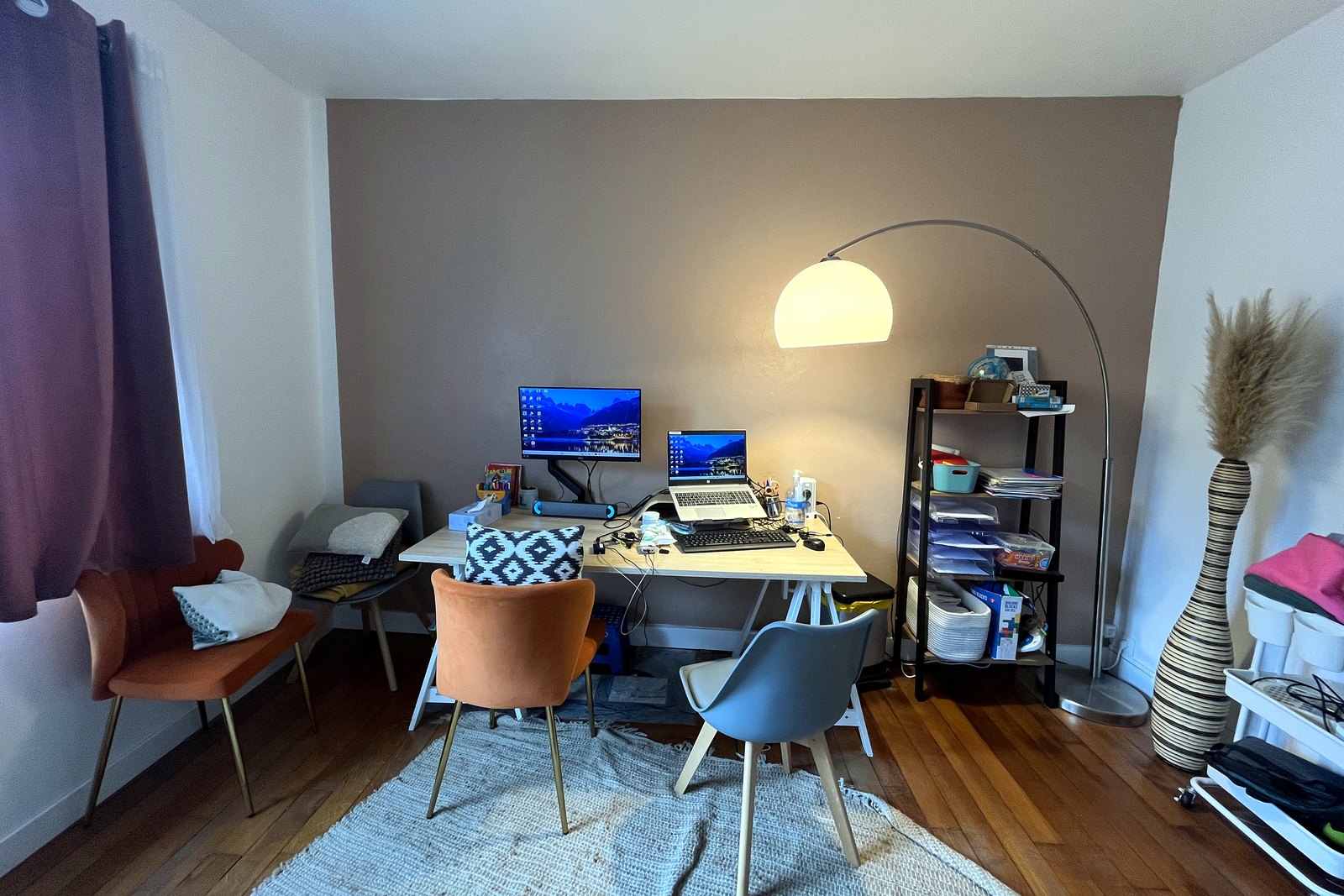
We see people troubled by tinnitus after their ENT assessment. Support focuses on managing stress and sleep: cardiac coherence and breathing biofeedback, learning muscle relaxation and, after a qEEG assessment, neurofeedback focused on self-regulation. With your consent, this work is coordinated with your ENT specialist, your doctor and your psychologist. If anxiety is the main issue, our article on anxiety disorders will give you useful pointers.
Frequently asked questions
Can neurofeedback make my tinnitus disappear?
We cannot promise that. The HAS does not recommend it for tinnitus itself, owing to insufficient evidence. Training may, however, help you better manage the stress, anxiety and sleep problems that often come with tinnitus.
Do I need to see an ENT specialist before coming?
Yes. A medical and ENT assessment is essential to look for a cause, hearing loss or any warning signs. Our support comes afterwards, alongside your medical care.
What do we actually work on in a session?
Depending on the assessment: breathing and cardiac coherence, releasing tension, and neurofeedback training geared towards a calmer state. You will also have simple exercises to practise at home between sessions.
Sources
- HAS (June 2026). Acouphènes invalidants chez l’adulte: diagnostic et prise en charge [Disabling tinnitus in adults: diagnosis and management]. Good practice recommendation (R.66 and R.67).
- HAS (June 2026). Acouphènes invalidants chez l’adulte: fiche de synthèse [Disabling tinnitus in adults: summary sheet].
- Jarach C.M. et al. (2022). Global prevalence and incidence of tinnitus: a systematic review and meta-analysis. JAMA Neurology, 79(9), 888-900.
- Güntensperger D. et al. (2017). Neurofeedback for tinnitus treatment: review and current concepts. Frontiers in Aging Neuroscience, 9, 386.