The essentials in 30 seconds
Normal anxiety or anxiety disorder: where is the line?
Anxiety is first and foremost a useful reaction: an alarm signal that mobilises the body in the face of danger or a challenge. It becomes an anxiety disorder when fear or worry is intense, excessive and hard to control, lasts for several months and ends up interfering with family, school, work or social life. These disorders often begin in childhood or adolescence, and affect women more than men.
In the bodyphysical signs
- Palpitations, shortness of breath
- Sweating, trembling
- Nausea, stomach aches
- Muscle tension, restlessness
- Disturbed sleep
In the mindpsychological signs
- Overwhelming worries, rumination
- Difficulty concentrating or making decisions
- Irritability, nervousness
- A sense of impending danger
- Avoidance of feared situations
The World Health Organization (WHO) distinguishes several forms, which can occur together in the same person:
What happens in the body and the brain
When faced with a threat, real or anticipated, the brain triggers an alarm response: the sympathetic nervous system speeds up the heart and breathing and tenses the muscles. The parasympathetic system, acting in particular through the vagus nerve, works as a brake and restores calm. In anxiety, the alarm goes off too often and too strongly, and the brake struggles to regain control.
Heart rate variability (HRV), that is, the small natural variations in the interval between two heartbeats, partly reflects this balance. Slow breathing, at around six breaths per minute, increases it: this is the principle of cardiac coherence (heart coherence breathing).
The established approaches
According to the WHO, psychological interventions are essential, and those with the most evidence are based on the principles of cognitive behavioural therapy (CBT), including exposure, which teaches people to gradually face what frightens them. Learning to manage stress (relaxation, mindfulness) also helps to reduce symptoms. In adults, a doctor may prescribe certain antidepressants (SSRIs). The WHO generally does not recommend benzodiazepines for these disorders, because of the risk of dependence and their limited long-term effectiveness. Any change to treatment must be decided with your doctor.
Heart rate variability biofeedback: what the research shows
Biofeedback makes a bodily signal (here, the heart rhythm) visible in real time, so that you can learn to regulate it. A meta-analysis published in Psychological Medicine (Goessl et al., 2017) pooled 24 studies and 484 participants: heart rate variability biofeedback was associated with a large reduction in self-reported stress and anxiety, including compared with control groups. However, the authors stress that better-controlled studies are still needed.
Neurofeedback and anxiety: the current evidence
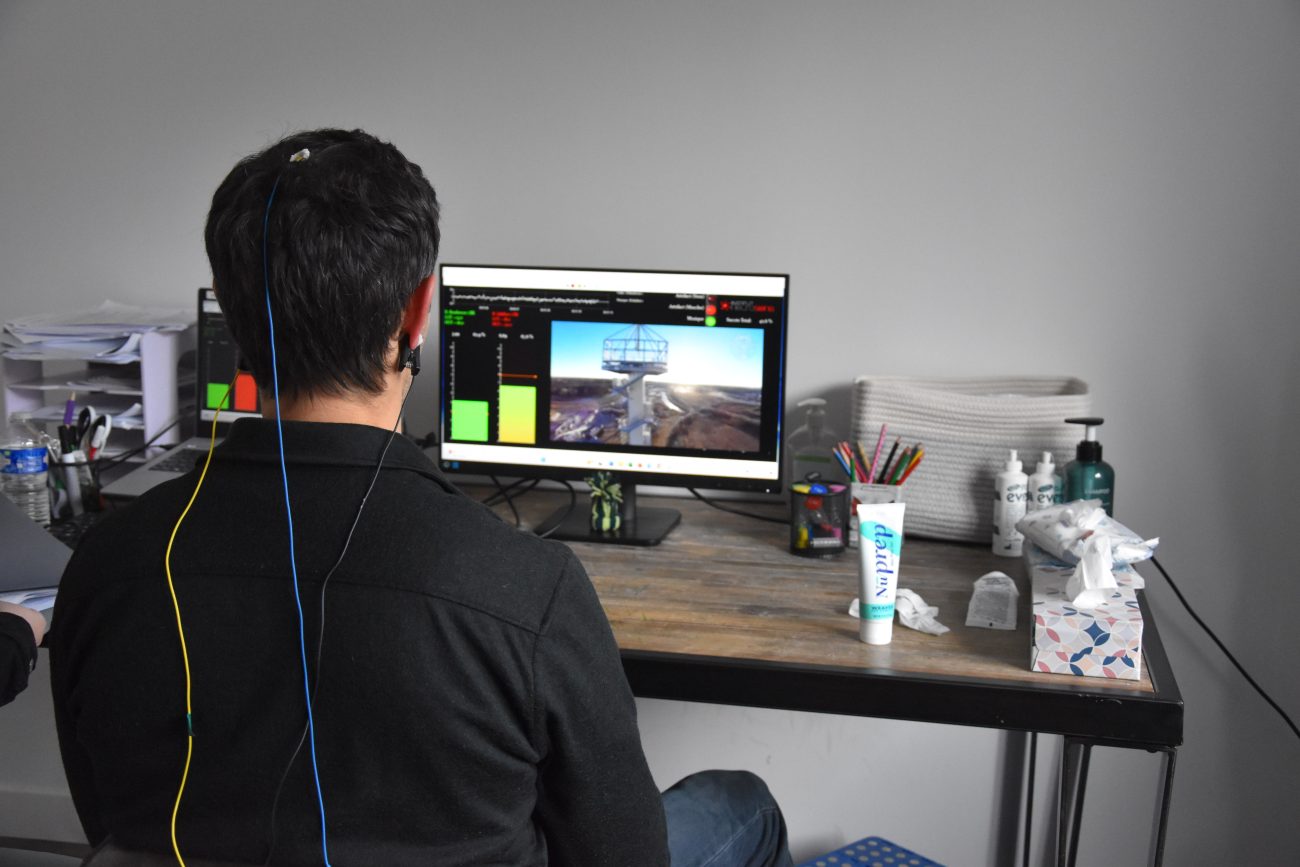
Neurofeedback applies the same principle to the brain’s electrical activity, measured by EEG: visual or auditory feedback indicates, in real time, when activity moves closer to the target state, for example a calmer state of alertness. A systematic review of randomised trials of biofeedback and neurofeedback in anxiety disorders (Tolin et al., 2020) offers a nuanced picture:
What the trials showencouraging results
- Greater improvement in anxiety than with no intervention (waiting list).
- Approaches judged to be effective overall in anxiety disorders.
- A variety of signals studied: heart rate, muscle tension, EEG…
What remains to be showncurrent limitations
- Superiority over other active approaches.
- A specific effect, distinct from the non-specific effects of the support provided.
- Better-quality studies: most are rated “weak”.
In other words, these approaches seem useful, but we do not yet know precisely how much of their effect is due to the training itself. Neurofeedback is not one of the established approaches: it should be seen as a complement to them.
At the centre: learning to regulate anxiety, not to eliminate it
The aim is not to get rid of anxiety altogether, as it serves a useful purpose, but to regain some room for manoeuvre: being able to recognise when stress is building and bring it back down. After a quantitative EEG (qEEG) assessment and questionnaires, training combines the following, depending on your needs:
Cardiac coherence
Heart rate variability and breathing biofeedback, with exercises to practise at home.
Body tension
Measuring muscle tension and stress reactivity, so that you can learn to relax.
Neurofeedback
A personalised protocol based on the assessment, to train a calmer, more settled state.
With your consent, this work is coordinated with your doctor or psychologist. Is work-related stress an issue for you? Find out about our services for businesses and occupational health, and read our article on OCD, which used to be classified as an anxiety disorder.
Frequently asked questions
What is cardiac coherence?
It is a state in which the heart rate varies regularly with the breath, most often achieved by breathing slowly, at around six breaths per minute. In biofeedback, a pulse sensor lets you see live whether the exercise is working.
Does biofeedback replace psychotherapy or medical treatment?
No. It complements medical and psychological care. Cognitive behavioural therapy and, if needed, treatment prescribed by a doctor remain the standard approaches.
Do I need a diagnosis of an anxiety disorder to come?
No. You can come to us for stress that keeps building up, tension or disturbed sleep. The initial assessment is a chance to take stock and, if necessary, to direct you to your doctor.
Sources
- World Health Organization (September 2026). Anxiety disorders. Fact sheet.
- Goessl V.C., Curtiss J.E., Hofmann S.G. (2017). The effect of heart rate variability biofeedback training on stress and anxiety: a meta-analysis. Psychological Medicine, 47(15), 2578-2586.
- Tolin D.F., Davies C.D., Moskow D.M., Hofmann S.G. (2020). Biofeedback and neurofeedback for anxiety disorders: a quantitative and qualitative systematic review. Advances in Experimental Medicine and Biology, 1191, 265-289.